
The "Exception" and So-Called "Artificial Intelligence"
Carl Schmitt's short work "Political Theology" offers some key insights into the nature of LLM algorithms, and their key, fundamental fatal flaw. It's the same problem the "the rule of law" has.

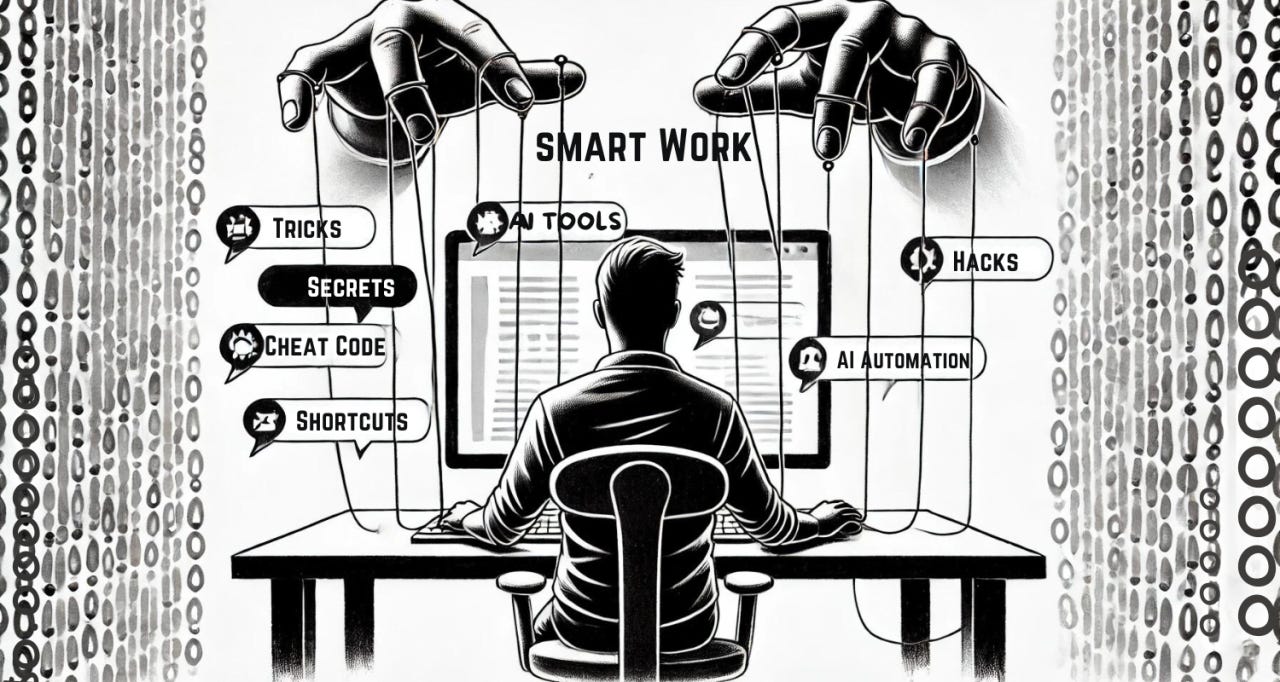

Carl Schmitt is known for several pithy phrases offering deep insight into society and politics. The problem is that once these phrases are out in the wild, they are used without reference to ideas and critiques upon which they are built. While this can be a good thing, often the phrases will used in ways that are completely divorced from the powerful insights that give them their real force. One such is:
“Sovereign is he who decides the exception.”
The most common way that you hear this phrase used to justify a strong, forceful leader who can make decisive decisions in a moment of crisis. A dictator. An autocrat. A monarch. But few, unfortunately, take the time to really understand what exactly is the “exception,” why it is the particular problem of modernity and then what can be done in response to this problem. I would argue that the problem we face with these sophisticated algorithms which are propagandized to us as a form of “intelligence” is actually exactly the same problem which Schmitt is dealing with in Political Theology. What is with the title of that book anyways? Well, to answer that, you must understand that the formation of law is, in the end, a kind of miracle. But we run ahead of ourselves. Let’s begin by talking about the closed system of law that is this thing called “the rule of law” because in understanding that, we will be able to properly understand the nature of sophisticated computer programs and their fundamental flaw.
A key impulse of the modern era, argues Schmitt, is to suppress the question of sovereignty by means of the division of powers and a mutual control of competencies. What this last means in practice is that power is taken away from persons to be vested in a system of law and policy that we know as “the rule of law.” The purpose of the state is not so much to wield power as it is to make laws or write policy. The illusion that is created is that “the law” itself is sovereign, that the law is what is governing society. The role of people is merely to tweak the law to keep the whole system humming. Even though politicians produce and vote on the law, the actual content of the law is supposed to be derived from the will of the people. In theory, every person in the land is supposed to submit themselves to this closed system of law. Everything, every person is supposed to be subject to the law. No one is supposed to be “above the law.” Everyone is “under the law.”
There are a number of problems that crop up with this and we won’t deal with them all, as that will divert us from our main purpose. First, how is the will of the people ascertained? How is that we come to know what it is that the people want in and from the laws under which they will live? The other question is that of interpretation and enforcement. Who decides how to interpret the meaning of the law in all the various circumstances that might arise? From a religious perspective, is God involved in this process? Is he present? Is he subject to the laws? Or, is he just not really taken into account at all? If there is a God, does he involve himself in human affairs? Or, having made things, and set up the laws of creation, has he just stepped back to let things run like a giant clock? This is the classic “watchmaker God” of Deism.
In this context, argues Schmitt, the state itself becomes supreme, a kind of abstract person, unique unto itself with a monopoly on power. When you begin to probe where this power comes from, it seems to be almost mystically produced. The divine right of the king becomes the divine right of the state, but without God. The state becomes a kind of theological concept. The machine runs itself. Law is produced. No one person is in change. The managerial state tries to eliminate the concept of sovereignty altogether. “The system” decides things. Behind the system is an army of experts whose expertise is seen as near infallible. In the modern technocratic state there are no political problems, there are only problems of management, of getting the system correct. “The system” is the collection of laws and policies that govern the institutions and the people.
So, you have this closed system of law that governs all of society. In theory all that is needed is small additions and adjustments to deal with new circumstances. But, in the end, everyone is subject to the law, to the policies. It is the law that decides. It always seems an offense somehow to see people asserting themselves in the process, people like judges. It is supposed to be the law that determines how we are governed.
This notion is incredibly powerful when applied to society more broadly through the managerial state in government, business and non-profits. If we think about what is happening, the problem that we are dealing with is the vagaries of rule by persons. If you have great ruler, this is fantastic. But what if you have some who is incompetent or lacks virtue. Well, here is where the law comes in. The law sets the standards for good behaviours. The law also determines the proper decision or outcome in as many situations as possible. And when properly applied, almost every facet of life can be analyzed, broken down, abstracted and turned into a set of rules. What this does is it allows you to create a high degree of consistent outputs. Additionally, it also raises the floor on decision making for those who may lack the ability to engage in the level of reasoning necessary to exercise good judgement in all situations. This allows you to greatly expand the size and scope of institutions. They dictate the most efficient and effective way to engage in one’s work. The tell you how you are supposed to act or respond in every possible situation that could be conceived. If, this thing happens, then you do this. As long as you can develop the right policies and train people into them you can make many, many more people able to function and produce consistently at a level they would otherwise not be able to achieve on their own. Like I said, “the rule of law,” or the managerial systems approach to governance, is immensely powerful.
It does come with costs. The first is that the system, while raising the floor and producing consistent outcomes, also expects all of the high performers, or at least as many as is possible, to fit within and submit themselves to the law. The rule of law only works if everyone submits to it. Managerialism and the rule of law tends to punish those who break the rules and see themselves as above the law or outside the rules. Is this always successful? No. Many, many high achievers still break out of the confines of the system to innovate and to genuinely lead, but the system itself discourages this sort of behaviour. It wants to put people under the rule of law, under the governance of the policies. If it happens enough, though, it does begin to cull innovation and variance out the system. This creates standardization. As the systems are constantly adjusted, they all gravitate towards a single best way to do everything, what we know as “best practices.” This gradually squeezes innovation and novelty out of the system. This may optimize the system, but it also makes it more fragile. Why is this? Judgement is like any faculty. If you don’t use it, you lose it. This means that people become reliant upon the systems and the policies to tell them how to act and become deficient in their ability to exercise their own judgement. This begins to lay the groundwork for a slow gradual erosion of competence across the system.
This is where so-called “artificial intelligence” comes into play. We will get into this more deeply in a moment, but essentially what these sophisticated algorithms do is allow human beings without the requisite skills — and even those who do have them — to achieve a base line level of competent outputs across of variety of vectors and situations. From producing images, to processing data, to doing spreadsheets and mathematical calculations, to writing, to operating machines like automobiles, they seem to manage all manners of activities quickly and easily with a consistently high level of outputs. But again, while raising the floor, they will also begin to cap and limit the highs of top level producers. I will hear the argument that some will use this software to do creative and innovative things they would never have been capable of doing on their own. I don’t disagree with this. This is also true of ordinary managerial systems as well. Top level performers can use these systems to build powerful organizational systems that enable them to make billions of dollars. But, for every billionaire, how many more are using these programs in ways that make them lazy, that erode their skills? Maybe even with their degraded skills plus the algorithms they are achieving more than before, but how long until this is no longer the case? How long till they need the algorithms to perform at 95% of what was being done just a short time ago with the algorithms? What happens as the algorithms themselves become ever more smoothed, ever more standardized? The more human excellence you pass off to the machines and the systems so they can do and decide things for you, the less excellent you become.
But this is not even the real danger. That is what is known as the “exception.”
But before we grapple with that, we need to go a little deeper into the nature of computers to understand why, as amazing as these programs are, they will never think, and they will one day crash out because of the “exception.” Computers, all computers, are at their most basic level, electrical switches. Kind of like the light switch on the wall. On or off. The microchips that are in your computer are made up of many many tiny switches called transistors that are able to be turned on or off via electrical inputs.

Once these switches were miniaturized, and arranged together in the correct sequences, you could then direct electrical inputs through the switches in various ways to turn switches on or off in predictable patterns. This allows you to create a series of “logic gates.” If you translate the “on” and “off” states into a series of “yes” and “no” responses you can build out logical sequences that allow you to map out a series of Boolean operators like “and,” “or,” and “not.” Most importantly, you can build up from these to the “if-then” statement. Basically, IF switch “a” is off, THEN feed a current to turn switch “b” on. All computer programs are beholden to the on and off nature of switches and basic IF/THEN logic. It does not matter how sophisticated a computer program is, or how large a data set your program is drawing from, it cannot change the basic IF/THEN structure of a computer at the chip level.
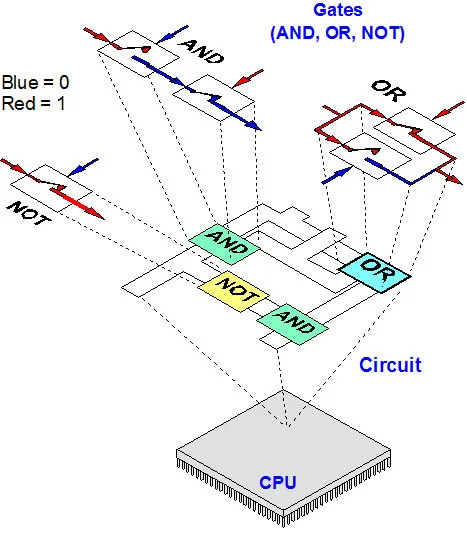
Knowing this frees you from any and all hype surrounding the possibility of “intelligence” emerging from these programs. It is all just ON and/or OFF. It is completely legible. There are no “emergent states” or real intelligence. Your computer is just an advanced light switch. No one thinks of the light switches on the wall as intelligent. They need a person to switch them off or on. So too these computer programs.
A human being is very much different. We are not merely a set of switches. Even if we confine ourselves merely to the physical, and don’t assume that consciousness is something more than simply organic processes, what is happening within our biology is not at all like a computer. There are organically produced bio-electrical charges. No one really understands how it all works. How do we remember things? Why can’t we remember them sometimes? Where and how does thought work? How does conscious and subconscious or preconscious through work? Why are women so illogical? There seems to be a lot of bio-chemical half states. We are not a collection of ON or OFF states. Here is an illustration lifted from a recent piece by William M Briggs:
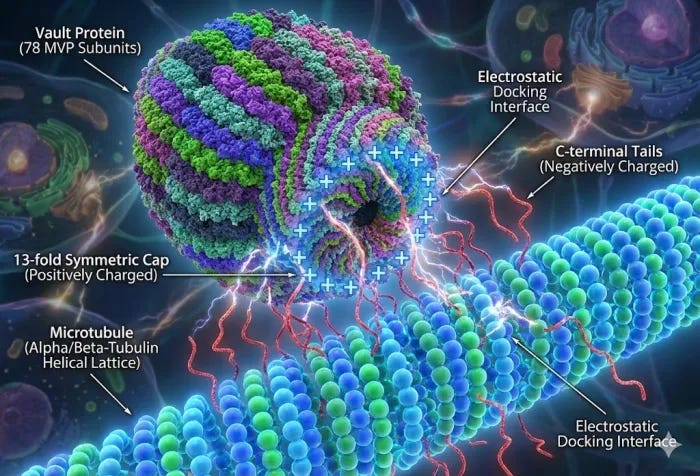
This is a sub-cellular structure. Each cell has over 10,000 of these. I urge you to have a read of Briggs’ piece to properly understand the magnitude of the difference between the human brain and even the most advanced and sophisticated computers.

Additionally, we know that brain architecture grows and develops around the tasks given to it. A baby’s brain is still not fully developed at birth and continues to add tissue for a number of years. This is why they are such sponges. Its also why learning multiples languages is easier for young children. Their brain structure is less fixed and will adapt to the things it is learning. Additionally, as we deep learn things through repetition, our brains actually grow more efficient in doing these task due to the addition of the growth of myelin sheaths around these structures such that they become almost second nature, unconscious to us. This is also, why bad habits are so hard to overcome. You have literally built your brain around them, making your flaws and sins second nature to you. These structures don’t leave you but they can be overwritten with new habits. This is why change is hard. This is why raising children up rightly is the best thing you can do for them. You set and establish the patterns that stay with them for life.
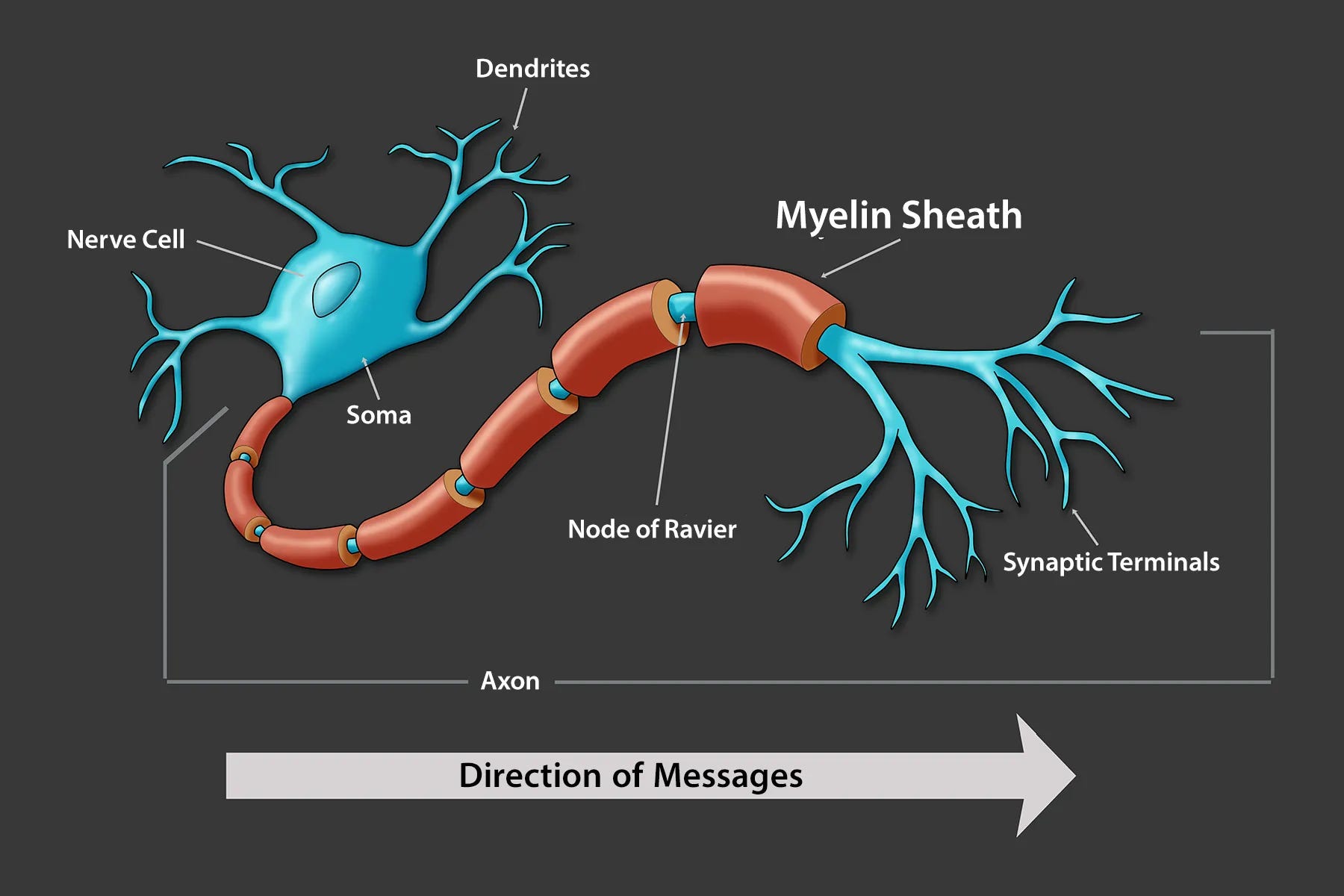
Again, this is not how computers work. Computers are merely a sophisticated version of the policy manual that we talked about above. IF this happens THEN do that. Computers do not allow for exceptions. They do not allow for half states. If it seems this way sometimes, this is only an illusion created for you using the ON and OFF architecture of the circuitry. Who hasn’t been told, “I can’t give you your refund because the computer won’t let me.” This is the rule of law at work. This is the essence of computers. They are an extension of the idea of the rule of law. Machines are in many ways at the heart of the thinking that is the basis of the rule of law and, by extension, managerialism. Things are examined, broken down, abstracted, rationalized and then turned into a system of rules that are then imposed, a set of guidelines that dictate behaviour. They can be in the form of general principles that then have to be applied to different situations. Or they can be very specific, detailing what should be done and how you should respond in as many situations as can be conceived. This happens too with general principles. As they get applied and the decisions are recorded, these precedents become part of the totality of “case law.” This is also why today people use the “case method” in teaching. It is a way of trying to teach sound judgement by confronting students with “real world” situations they might face such that they build up a reservoir of past decisions that can guide future decisions.
Computers, though, do not exercise judgement. They operate like a sophisticated policy manual that attempts to cover all conceivable situations, dictating what must be done in response to each situation to properly navigate it to a successful outcome. The policy manual attempts to remove the need for personal judgement. The “rule of law” is similar in design and intent. The idea is to remove the personal, to de-politicize society by removing the necessity for discussion, disagreement and conflict by dictating what should be done in every situation. A computer, via its IF/THEN structure dictated for it at the hardware level, is exactly the same. IF you receive this data input, THEN you respond in this way. IF you can feed the computer enough data THEN, at least in theory, you should be able to give the correct response, proscribing the correct action in every situation. Whether it is predicting or prescribing what word or words should follow a particular prompt or previous set of words, it is just a matter of IF/THEN statements. The more words that are used in the database, the more accurate are the predictions should be, such that, IF the dataset is large enough and we devised a proper ruleset THEN we should, with relative accuracy, be able to mimic human speech. But this is all that is happening. It is a predictive engine based on ON/OFF switches and a complex series of IF/THEN statements. Whether it is doing calculations, driving a car, doing facial recognition, imitating a girlfriend, whatever, it is just a complex form of the “rule of law” or a sophisticated “policy framework.” There is no thought involved. There is no judgement involved.
Let me correct that. There is thought and judgement involved, but it is that of the programmers who have designed the logic gates that dictate the decision tree that the computer program is using to activate the switches in the hardware. A question we might ask is this: are the programmers of these systems now sovereign? It’s something we should be asking ourselves. Here is the kicker, the more that you rely on the algorithms to do tasks for you, especially the exercise of judgement, the less you will have the faculty to exercise these abilities yourself. We mentioned this above, but having now discussed brain structure and development, that it grows around the tasks we set for it and adapts to the sensory environments within which we are placed, we can see that the more we pass off the exercise of judgement — among dozens of other tasks — the less capable we become in doing so in situations where the using our judgement becomes critical. The whole impulse of modernity is to remove the vagaries of human judgment in terms of ability and virtue, so as to always govern society within a closed set of rules that cover all circumstances.
This is where Schmitt’s insight becomes important. He argued that there is no closed set of laws, no rule set so complete as to cover all situations and circumstances. This would require omniscience, that you know all possible things that could ever be known. It would demand you to be God. All knowing. Realizing this does let the cat out of the bag in terms of the intent of those who are the biggest boosters of these algorithms, those working on its cutting edges, is that whether they realize it or not, they are ultimately trying to manufacture God. This is the essence of the surveillance state. I have discussed this before:
There is a hope that these algorithms, if fed enough data, can stay out in front the problem of “the exception.” If the system can be steadily tweaked and adjusted it can obtain a kind of escape velocity that allows it to indefinitely stay ahead of whatever problems crop up and need to be addressed.
But, Schmitt argues that there is no system so complete that it can account for all possible situations, every crisis that might be faced. Eventually there will come a crisis so significant that it can neither be accounted for by the system of laws or policies, the decision trees that undergird so-called “artificial intelligence,” nor will the existing system be able to solve this problem using any of the mechanisms of the existing system. In this moment, society will face a total collapse, or someone, or someones, will step in, set aside the current system and then remake the whole social order and framework, restoring stability and order. Someone would have to step in and exercise personal judgement. This is why Schmitt argued that our current society, that is modernity in its entirety, will eventually need someone to step in and “fix” things using dictatorial control. Someone will have to step in and make the critical decision or set of decisions, unplanned for, and for which nothing in the current system could prepare society, to resolve this crisis. “Sovereign is he who decides the exception.”
So where does this sovereign gain the judgement necessary to resolve a situation for which no one could prepare and for which past experience or the rules of the system cannot provide an answer? This is why, in Political Theology, Schmitt spends time discussing miracles of all things. He argues that there is something at work the ancients understood but we seem to have forgotten or want to deny: that law is essentially a miracle. It is this that moderns have tried to deny. They assert that there are no miracles. They also posit that the closed system of law can obviate the need for miracles. What does he mean? Well, it was understood that the king, or the wise man, the man of God, the medicine man, that someone in the life of the community had insights from somewhere “outside.” Outside tradition and custom — the mechanism that functioned organically to teach and order the judgement of people within the community before policy manuals and the “rule of law” — there was something that these men drew upon. They perhaps read the signs. Or the spirits told them. In the Christian community this is the word of God. This is not the printed word of God, the Bible, but the dynamic active word of God. Where do you go when the scriptures don’t have the answer?
This is the essence of “wisdom” in the biblical tradition. In many ways, our salvation in Jesus Christ can be looked upon as the restoration of wisdom. What is interesting is that when we talk about the Old Testament, there is a temptation to understand the “law” as something akin to the “rule of law” or like a policy manual. You know, “God’s guidebook for living.” To understand the scriptures this way is miss the original point of the Old Testament “Torah.” In many ways it falls into the same trap that the Pharisees fell into of trying to define in ever more precise detail how the injunctions in the Old Testament should be followed in as many conceivable situations as possible with as much specificity as possible. Jesus criticizes this because they worried extensively about the right action in every situation, perfecting the IF/THEN logic chain, so to speak, without grasping the essence or spirit of the instructions.
This is really the thing. The Hebrew word to describe what God was giving his people was “instruction.” This is what the word “Torah” (תורה) means. One of the reasons that the Psalmists are always meditating on the law, the instruction, of God, is that the main goal of the commands was primarily to give you a pathway, a vehicle, for understanding the heart and mind of God, to interiorize his ways, so that in some sense you could think and act as God would in any given situation. The goal of the “instruction” into the ways of God is that at some point you would no longer need “instruction” but would have so interiorized God’s ways, that you could be trusted, that you could trust yourself to just act in any situation knowing it would be in harmony with God’s will, that you would be handling things as God would if he was in your situation. But, because of human sinfulness it just never happened.
This same idea is what undergirds the wisdom tradition itself. It is one’s relationship with God that opens the pathway to wisdom. It begins with the fear of the Lord. You tremble before the face of God. For an earthly king or leader of men this is especially important, that even with all your power and might, your knees buckle in fear before God.
“The fear of the Lord is the beginning of wisdom,
and knowledge of the Holy One is understanding.”Proverbs 9:10
The role of the king, or of the “man of God,” is in part to make judgements in moments of exception. To act wisely is to be able to know what must be done in situations where there is no blueprint, no policy, no plan, no Boolean decision tree to guide one’s self. On the one hand, the wise man is one who is subject to law, who is under the guidance of the instruction of God, his Torah, but yet at the same time he is “outside” the established instructions. He draws insight from God himself. When push comes to shove, whether it happens by a run of the mill “flash of insight” or full on theophany of some form, wisdom is, in the end, always something of a miracle.
Modern man is terrified of acknowledging this reality. It is unfortunate, but many Christians have participated in this modern argument against the miraculous. This is the idea that God only speaks to us exclusively through the Bible. Any other encounters with God are either on the level of emotions that are free from rational content, or than any new content one might think one has received from God must conform to the scriptures. While this may be true in the ordinary sense, there will always come situations for which the previous instructions of God are insufficient. In these situations we draw on the man of wisdom who is at once both under the written “instruction” of God, but also stands “outside” that instruction. He is then able, in the moment, to make a pronouncement about what to do because he has “the fear of the Lord.” He has access to the wisdom of God. This same dynamic is at play with biblical interpretation. I have written about this before:
There is a good passage from the Old Testament wisdom tradition that illustrates the essence of what is happening here. If you think of the Bible as a kind of policy manual, you will be lost when trying to understand this text:
“Do not answer a fool according to his folly,
or you yourself will be just like him.
Answer a fool according to his folly,
or he will be wise in his own eyes.”Proverbs 26:4-5
So what is going on here? If your conception of the Bible is that it is “God’s rulebook for living,” you will be lost. Here are two “rules” given back to back that contradict one another. So which is it? It is both. There are two paths that could be taken. It is the kind of thing that the decision tree of a policy manual or an algorithm is supposed to be able to work out. But the Proverbs are saying that there is no definitive answer and there is no set of criteria that one can use to answer the question. The idea is that you live before the face of God, you stand and tremble in his presence, trusting that in the moment when you are face to face with the fool, that a miracle will occur and you will have the correct insight into what to do. The answer lies “outside” of the pair of sayings. This is the essence of intuition and wisdom as the foundation of truth and understanding. This is exactly what modernity denies. It argues that truth can only be garnered through the senses and through reason. In other words, truth comes from data and decision trees. Whereas, the Bible makes the argument that truth and knowledge are ultimately grounded in intuition, specifically intuition of the mind of God, and that this intuition has real intellectual content and is not merely feelings. This is the content that comes from “outside” the product of sense and reason, data and logic trees.
Furthermore, we can argue from the scriptures themselves that a big part of the saving work of Jesus is to repair the ways that sin undermined and disrupted this intuition of divine omniscience. This is Jesus’ own promise to his disciples:
“I have much more to say to you, more than you can now bear. But when he, the Spirit of truth, comes, he will guide you into all the truth. He will not speak on his own; he will speak only what he hears, and he will tell you what is yet to come. He will glorify me because it is from me that he will receive what he will make known to you. All that belongs to the Father is mine. That is why I said the Spirit will receive from me what he will make known to you.”
John 16:12-15
There is no indication that this was just for the apostles, but rather is describing the new reality of being “in Christ.” We are being given access to the heart and mind of the Father by means of the gift of the Spirit. We do not have to worry about what to say or what answer to give when we are questioned about our faith.
“On my account you will be brought before governors and kings as witnesses to them and to the Gentiles. But when they arrest you, do not worry about what to say or how to say it. At that time you will be given what to say, for it will not be you speaking, but the Spirit of your Father speaking through you.”
Matthew 10:18-20
This really, is the essence of what the Proverbs is talking about. It is also at the heart of Carl Schmitt’s concept of the “miracle of law.” Perhaps you are unconvinced.
“We do, however, speak a message of wisdom among the mature, but not the wisdom of this age or of the rulers of this age, who are coming to nothing. No, we declare God’s wisdom, a mystery that has been hidden and that God destined for our glory before time began. None of the rulers of this age understood it, for if they had, they would not have crucified the Lord of glory. However, as it is written:
“What no eye has seen,
what no ear has heard,
and what no human mind has conceived”—
the things God has prepared for those who love him—these are the things God has revealed to us by his Spirit.
The Spirit searches all things, even the deep things of God. For who knows a person’s thoughts except their own spirit within them? In the same way no one knows the thoughts of God except the Spirit of God. What we have received is not the spirit of the world, but the Spirit who is from God, so that we may understand what God has freely given us. This is what we speak, not in words taught us by human wisdom but in words taught by the Spirit, explaining spiritual realities with Spirit-taught words. The person without the Spirit does not accept the things that come from the Spirit of God but considers them foolishness, and cannot understand them because they are discerned only through the Spirit. The person with the Spirit makes judgments about all things, but such a person is not subject to merely human judgments, for,
“Who has known the mind of the Lord
so as to instruct him?”But we have the mind of Christ.”
1 Corinthians 2:6-16
What is interesting here is that Paul is drawing a contrast between the wise and powerful of this age, the philosophers and kings and the “powers and principalities” whose sway they are under. We are right in midst of the question of the “miracle of law” and the “exception.” What Paul is arguing here is that because of the saving work of Christ and the gift of the Spirit that accompanies faith, we are able to access the true source of wisdom. We have the mind of Christ, the Word, Wisdom incarnate. We have, because of the Spirit, access to the inner thoughts of God himself. Notice the conclusion that Paul draws here. The person with the Spirit is not subject to merely human judgements. He is “above” the law. In this light, we can see clearly that the attempts contain the “word of God” to only those contained in the scriptures, actually undermines and is in contradiction with these very words. They undermine a core aspect of the saving work of God in Jesus Christ, the restoration of wisdom, the restoration of the “miracle of law.”
Paul sees this restoration of wisdom as not only a key aspect of salvation, but also as a restoration of the purpose of “the law” as instruction into wisdom.
“So I say, walk by the Spirit, and you will not gratify the desires of the flesh. For the flesh desires what is contrary to the Spirit, and the Spirit what is contrary to the flesh. They are in conflict with each other, so that you are not to do whatever you want. But if you are led by the Spirit, you are not under the law.
The acts of the flesh are obvious: sexual immorality, impurity and debauchery; idolatry and witchcraft; hatred, discord, jealousy, fits of rage, selfish ambition, dissensions, factions and envy; drunkenness, orgies, and the like. I warn you, as I did before, that those who live like this will not inherit the kingdom of God.
But the fruit of the Spirit is love, joy, peace, forbearance, kindness, goodness, faithfulness, gentleness and self-control. Against such things there is no law. Those who belong to Christ Jesus have crucified the flesh with its passions and desires. Since we live by the Spirit, let us keep in step with the Spirit.”
Galatians 5:16-25
What Paul is detailing here is our experiential battle with sin in the here and now. We are powerless to overcome sin within us. As a result, we needed the law to instruct us in what to do, so as to lead us to God himself. But when the Spirit is given to us because of our faith in Christ, the Spirit does battle on our behalf so that we don’t do the things that we want to do, that the law was powerless to stop. We want to sin. This is the tragic nature of fallen man. Even when we aspire to God, our desire for sin undermines us at ever step of the journey. But when we are led by the Spirit, his leading produces the actions, the “fruit” that we desire, that the law was incapable of producing for us. This is the fundamental failing of the policy manual approach, even if the policy manual is running in real time with massive quantities of data, it cannot overcome the tragic, sinful nature of humanity. Paul is very clear. If you are led by the Spirit, you are not under the law. You now stand “above” the law. When your life’s actions are the result of the fruit of the Spirit, no one can hold any law against you because your behaviours, your decisions in the moment, flow out of the mind of God.
One does not necessarily always need a direct word from God. Someone who has been brought into the mind of God, who has the fear of the Lord, can use their intuition to speak wisdom into the moment. Paul himself acknowledges this:
“Now about virgins: I have no command from the Lord, but I give a judgment as one who by the Lord’s mercy is trustworthy.”
1 Corinthians 7:25
This is the essence of the “miracle of law” at work. This is sovereignty. This is a moment of decision for which there was no prior rule. It is this space into which the saving work of Christ is supposed to move us. As with all gifts and natural capacities, some of us will have it more than others. Just because you are in Christ does not mean that you no longer need the wisdom, counsel and judgement of others. It does not mean that you can ignore the scriptures. We need the community of believers and we need the scriptures. But at the same time we also need the wisdom of God in the moment, because the exception is not going to go away. I expect that the more we try to manage the system, that the greater the crisis will be when the exception does come.
We still need the miracle of law. But we also need to cultivate our capacity for wisdom. For us as Christians, we know that rightly ordered wisdom, genuine truth, comes from God. Because we know it comes from God, we would be well served to draw close to him, and to cultivate the gifts and abilities given to us by God. We know that we build capacity at a biological level around the things we practice. If we give over more and more tasks and capacities to the algorithms our ability to exercise wisdom will atrophy, or never develop in the first place. Most of us will never be “sovereign,” but that does not mean we should not develop the capacity to exercise good judgement to the best of our abilities. The general decay of judgement is all part and parcel of the growing competency crisis. I am of the mind that we came much closer to “the exception” during the recent Covid crisis than it may have seemed. And as a Christian, I believe that the application of these understandings go well beyond society grappling with so-called “AI,” but will be foundational in the “paradigm shift” that is building under the surface as a result of the societal effects of living under “policy manual of things.” Grappling with these realities today and leaning into the “miracle” of wisdom and truth will allow us to lead in the coming times of trouble as modernity experiences its end game.
Sponsorship Partners
FoxNSons Coffee

Steve Fox is one of “our guys” and he sells coffee. Good coffee. If you live in the US — sorry Canadians…too much government red tape involved in shipping coffee over the border…my supply comes hand delivered — he can ship you your coffee right to your doorstep. Go to the FoxNSons website now and use the promo code “kruptos” for a 15% discount.
Axios Fitness Coaching

JD is also one of “our guys” and he wants to help you get fit and stay fit for what is coming. Head over to Axios and get started today!
This is one of your best essays.